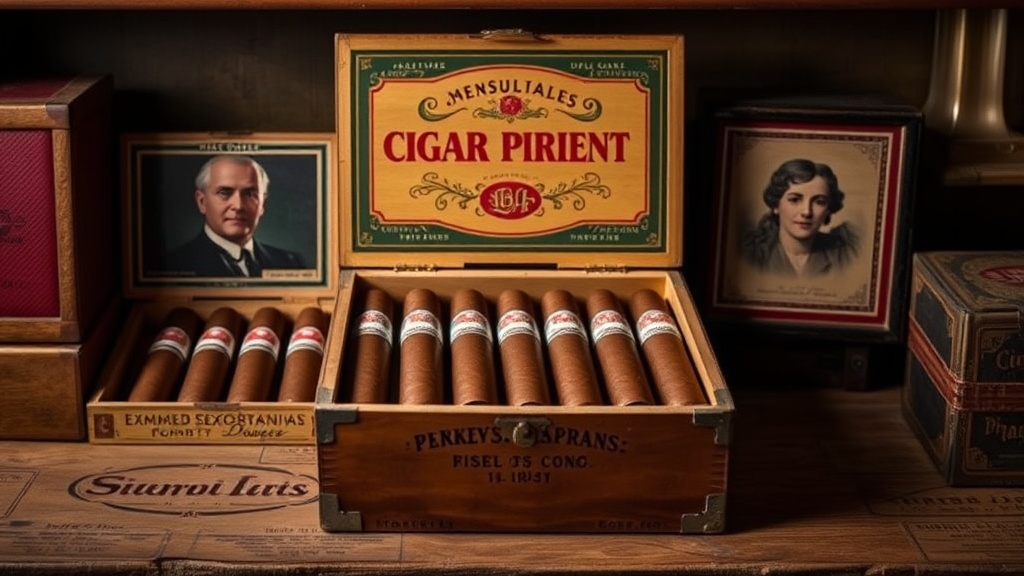
How to Restore and Display Vintage Cigar Boxes

This guide covers everything needed to bring worn cigar boxes back to life—from cleaning decades-old paper labels to building displays that protect against light and humidity. Whether you've inherited a collection or just picked up a promising piece at auction, proper restoration and presentation techniques can transform dusty boxes into conversation-worthy collectibles worth showcasing.
How Do You Clean Vintage Cigar Boxes Without Damaging the Paper Labels?
Start with dry cleaning methods before introducing any moisture. Paper labels from the 1920s through 1960s—the golden age of cigar box art—are surprisingly fragile. Water stains, foxing, and grime can ruin a box's value if handled carelessly.
Begin by gently brushing the entire surface with a soft, natural-bristle brush. The Winsor & Newton Series 7 kolinsky sable brush (size 6 or 8) works well for detailed label work—expensive, yes, but far gentler than cheap synthetic alternatives. Work in one direction, never scrubbing. Loose paper flakes and surface dust should lift away without pressure.
For stubborn grime, try a kneaded eraser. The Factis Extra Soft Kneaded Eraser (available at most art supply stores) lifts dirt from embossed paper without abrasion. Pat—don't rub—and knead the eraser frequently to expose clean surfaces.
Wet cleaning requires caution. Mix a solution of distilled water with a drop of mild dish soap like Dawn Original. Dampen—not soak—a cotton swab or microfiber cloth. Test on an inconspicuous corner first. Work in small circles, drying immediately with a lint-free cloth. Never let moisture sit on paper labels.
Shellac finishes on wooden boxes demand different treatment. A barely-damp cloth with mineral spirits can cut through nicotine buildup and hand oils. Follow immediately with a dry cloth. The Howard Feed-N-Wax wood polish (orange oil and beeswax formula) restores luster to dried wood without the silicone buildup that damages antique finishes over time.
What's the Best Way to Repair Torn Labels and Loose Hinges?
Repair torn labels using archival materials specifically designed for paper conservation. Regular tape—even "invisible" tape—yellows, becomes brittle, and damages paper fibers. The adhesive migrates, creating stains that are nearly impossible to remove later.
For tears, apply Lineco Neutral pH Adhesive with a fine brush to the reverse side of the torn paper. Press gently into place using wax paper as a barrier, then weight it flat while drying. This wheat starch paste—used by professional conservators—remains reversible decades later. Simply dampen and the adhesive reactivates for removal or repositioning.
Missing paper sections present bigger challenges. Some collectors leave gaps alone—honest wear tells a story. Others choose inpainting with watercolor pencils (Derwent Watercolour Pencils offer excellent color matching) to reduce visual distraction. Never paint directly over original paper; work on thin Japanese tissue paper (Kozo or Gampi sheets from art supply stores) inserted behind the damaged area.
Loose hinges on wooden boxes need structural attention before cosmetic work. Remove old nails carefully using end nippers, not claw hammers—hammers splinter thin wood. Replace with brass escutcheon pins from Horton Brasses or similar hardware specialists. These match period construction and won't rust like modern steel nails.
Fill small cracks in wood with Behlen's Pore-O-Pac Wood Filler tinted to match the original finish. For larger gaps, consider Dutchman repairs—inserting small pieces of matching antique wood rather than filling with synthetic putty. The latter looks obvious and hurts resale value among serious collectors.
Tools Worth Investing In
- Microspatula set — for lifting paper without tearing
- Magnifying headband lamp (3x-5x magnification) —看清 tiny detail work
- Japanese bookbinding awl — for cleaning nail holes without enlarging them
- Odor-free mineral spirits — for cutting old wax and grime
How Should You Display Cigar Boxes to Prevent Damage?
Display choices directly impact preservation. Light, humidity, and handling cause more damage than age itself. A box stored properly in a closet looks better after fifty years than one displayed poorly for five.
UV light destroys paper. Colors fade. Cellulose fibers weaken. Even indirect daylight damages labels over time. The solution isn't keeping boxes in darkness—it's controlling exposure. Display cases with Tru Vue Museum Glass or Artglass AR 70 block 99% of UV rays while remaining virtually invisible. Standard glass blocks only about 45%.
Acrylic display cases offer another option. Plymor and Clear Life both manufacture UV-filtering acrylic cases sized for collectibles. Acrylic weighs less than glass and won't shatter, though it scratches more easily. Clean with microfiber cloths only—paper towels micro-scratch acrylic surfaces permanently.
Humidity control matters enormously. Paper swells in high humidity, contracts in dry conditions. Repeated cycling causes warping, cracking, and mold. Ideal relative humidity for paper-based collectibles: 45-55%. A SensorPush Wireless Thermometer/Hygrometer ($50) monitors conditions and sends phone alerts when humidity drifts outside safe ranges.
For serious collections, Eva-Dry E-333 Renewable Mini Dehumidifiers work inside display cabinets. These silica gel units absorb moisture, then "recharge" by plugging into a wall outlet. No refills, no spills, silent operation.
| Display Method | UV Protection | Best For | Approximate Cost |
|---|---|---|---|
| Open shelf | None | Rotation displays (3-month max) | $0 |
| Standard glass case | 45% UV block | Rooms with no direct sunlight | $50-150 |
| UV-filtering acrylic case | 98% UV block | Moderate light conditions | $80-200 |
| Museum glass display | 99% UV block | Permanent displays, valuable pieces | $150-400 |
| Closed cabinet + dehumidifier | Variable | Humid climates, long-term storage | $200-600 |
What About Lighting for Highlighting Your Collection?
Light creates drama. The embossing on a El Producto Queens box from the 1950s practically glows under proper illumination. But light also destroys—so balance matters.
LED lighting solves most problems. Unlike halogen or incandescent bulbs, LEDs emit virtually no UV radiation and produce minimal heat. The Philips SceneSwitch LED bulbs let you toggle between warm (2700K), daylight (4000K), and cool white (6500K) to find what flatters specific boxes best. Golden-age lithographs often look stunning under warm light; modern minimalist designs may prefer cooler temperatures.
Position lights outside display cases when possible. Glass reflects light sources directly into viewers' eyes, creating glare that obscures detail. Puck lights mounted above cases, aimed downward at 30-degree angles, eliminate most reflection problems while providing even illumination.
For floating wall displays, Modular LED Picture Lights from Cocoweb adjust in length and brightness. These battery-operated options eliminate cord clutter—important in rooms where aesthetics matter as much as the collection itself.
How Do You Organize a Growing Collection?
Organization systems prevent the chaos that leads to damage. Boxes stacked haphazardly crush lower pieces. Random placement makes rotation impossible. Hunting for one specific box causes handling wear on everything else.
Catalog first. Create a simple spreadsheet tracking manufacturer, date, dimensions, condition grade, acquisition source, and purchase price. Include a photograph of each box. Free options like Google Sheets work fine; dedicated collecting software like Collectorz.com Connect offers more structure for large collections.
Storage while not on display requires thought. Acid-free boxes—the Archival Methods Metal Edge Boxes in various sizes—protect against dust, light, and physical damage. Never store cigar boxes in attics (temperature swings) or basements (humidity, flooding risk). Interior closets on main floors typically offer the most stable environments.
Rotation extends display life. Keep three categories: permanent display (your absolute favorites), rotating display (changed quarterly), and storage. This approach lets you enjoy the full collection while limiting each box's exposure to damaging conditions.
"The best preservation strategy is handling prevention. Every time someone picks up a vintage cigar box, risk enters the equation. Display what's necessary. Store the rest properly. Rotate regularly." — American Institute for Conservation
For additional guidance on paper conservation techniques, consult the American Institute for Conservation. The Library of Congress Preservation Directorate offers excellent resources on caring for paper-based collections. For understanding the historical significance of cigar box art, the Smithsonian National Museum of American History maintains collections documenting American tobacco advertising history.
Restoration and display isn't about making old boxes look new. It's about honoring their history while ensuring future generations can appreciate the lithographer's craft, the woodworker's joinery, and the cultural moment each box represents. Start with gentle cleaning. Progress to careful repair. Display with protection in mind. The boxes have survived decades—they'll survive decades more with proper care.
Steps
- 1
Assess Condition and Clean Gently
- 2
Repair Structural Damage and Preserve Labels
- 3
Choose the Right Display Method for Your Space