Rare Wood Varieties Found in Antique Cigar Boxes

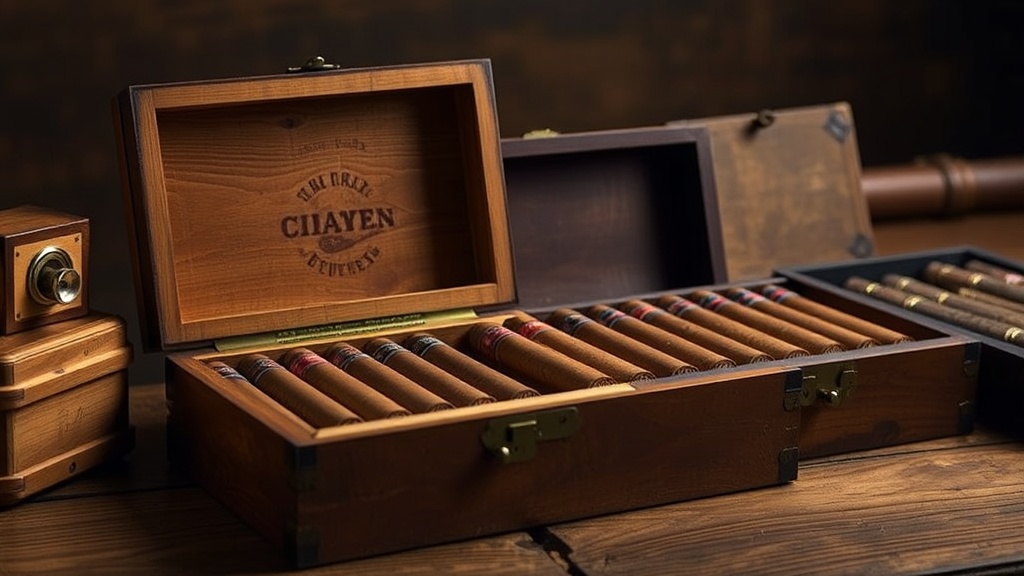
A heavy mahogany lid swings open, revealing a deep, honey-colored grain that catches the light of a desk lamp. Beneath the lid, the smell of aged cedar is faint, replaced instead by the scent of weathered oak or dark walnut. For the serious collector, the material of the box is just as significant as the printed label on top. This post examines the specific rare wood varieties found in antique cigar boxes and explains how wood type influences both the value and the preservation of your collection.
Most people assume all cigar boxes are made of cedar. While Spanish cedar is the industry standard for moisture control, the history of the trade used much more diverse materials. Understanding these woods helps you identify high-quality pieces and avoid common pitfalls in the secondary market.
What are the most common woods used in antique cigar boxes?
The most common wood used in antique cigar boxes is Spanish cedar (Cedrela odorata), prized for its ability to regulate humidity and provide a pleasant aroma. While cedar is the gold and gold standard, you'll frequently encounter cheaper alternatives in mass-produced or lower-end vintage boxes.
In the late 19th and early 20th centuries, manufacturers often used whatever was cost-effective and locally available. This led to a wide variety of woods appearing in the market. You might find boxes made of pine, oak, or even simple plywood for much cheaper, non-premium products. If you're looking at a box that feels particularly heavy or lacks that distinct "cedar" scent, it's likely a different species entirely.
Here is a breakdown of the most frequent materials found in vintage collections:
- Spanish Cedar: The gold standard for cigar preservation. It is soft, lightweight, and highly aromatic.
- Oak: Often found in larger, more decorative or "presentation" style boxes. It is much harder and heavier than cedar.
- Mahogany: A premium wood used for high-end, luxury cigar boxes. It has a tight, consistent grain and a deep reddish hue.
- Pine: Usually found in much older, more utilitarian boxes. It lacks the scent profile of cedar and is more prone to wayward warping.
- Balsa: Used occasionally for very lightweight, decorative-only items that weren't intended for long-term storage.
The distinction between these woods is vital because it affects how you handle the item. For instance, a pine box might react much more drastically to humidity changes than a sturdy mahogany piece. If you've already mastered the art of cleaning dust and grime from vintage cigar box surfaces, you know that the wood substrate dictates your cleaning approach.
How can you identify rare wood types in your collection?
You can identify rare wood types by examining the grain pattern, weight, and the specific scent of the box. If a box lacks the characteristic "cedar smell" but has a high-end look, it is likely a different exotic wood.
First, look at the weight. A mahogany box will feel significantly more substantial than a cedar box of the same size. Second, check the grain. Cedar has a relatively uniform, straight grain, whereas woods like walnut or oak have more dramatic, swirling patterns. If you see a very dark, dense grain, you might be looking at a piece of high-quality tropical hardwood.
The scent is the biggest giveaway. If you open the box and it smells like nothing—or perhaps just old paper—it isn't Spanish cedar. This is a common issue with much lower-grade boxes. To get a better sense of wood density and botanical classification, you can consult the Wikipedia page for Cedrela odorata to see the standard properties of the wood used in the cigar industry.
One thing to watch out for is the "fake" premium look. Some manufacturers used thin veneers of expensive wood over cheap pine to make a box look more expensive than it actually was. This was common in the mid-20th century. A simple way to test this is to look at the bottom or the edges of the box; if the grain changes abruptly or looks "glued" on, it's a veneer.
| Wood Type | Typical Use | Durability | Collector Value |
|---|---|---|---|
| Spanish Cedar | Standard Premium | Medium | High |
| Mahogany | Luxury/Gift | High | Very High |
| Oak | Decorative/Large | Very High | Medium |
| Pine | Budget/Utility | Low | Low |
Does the wood type affect the value of a cigar box?
Yes, the wood type significantly affects the value because certain woods like mahogany and high-grade cedar are more desirable to both collectors and cigar enthusiasts. A box made of a rare or premium wood is often a sign of a higher-end product originally, which translates to higher collector value today.
Collectors don't just look at the label. While a beautiful lithographed label is a huge draw, the material underneath provides the "heft" and longevity of the piece. A mahogany box with a pristine label is a "holy grail" item for many. On the other hand, a box made of a cheap, soft wood might have a beautiful label but will be more susceptible to structural failure over time.
The value also hinges on the condition of the wood itself. If a cedar box has become brittle or has significant cracks, its value drops sharply. This is why preservation is so important. If you are displaying your pieces, you should consider protecting your labels from sunlight damage, as UV rays can degrade both the paper and the organic wood fibers over time.
It's also worth noting that certain wood types are more "stable." A cedar box is designed to handle the environment of a humidor. If you find a box made of a more volatile wood, you'll need to be much more careful about how you store it. You don't want a beautiful piece of history warping or cracking because it was stored in a damp basement.
There's a certain charm to the weight of a real wood box. When you hold a heavy, dark walnut or mahogany box, it feels different than a light, mass-produced piece. It feels like a piece of history. That tactile sensation is part of what makes collecting these items so rewarding.
When you're out at antique fairs or browsing online auctions, don't just look at the picture of the label. Ask the seller about the material. If they can't tell you, or if they say it's "just wood," proceed with caution. You want to know exactly what you're bidding on. Is it a genuine cedar box, or just a piece of painted pine? The answer can change your investment significantly.
The relationship between the wood and the paper is what makes these objects unique. The wood provides the structure, the scent, and the weight, while the paper provides the art and the identity. Together, they form a complete piece of history that deserves careful study and even more careful preservation.