Identifying Authentic Vintage Cigar Box Hardware and Hinges

This guide provides the specific technical markers needed to identify authentic vintage cigar box hardware, including hinges, latches, and corner protectors. You'll learn how to distinguish between original metalwork and modern reproductions by examining material composition, patina, and mechanical design. Identifying these details is vital for determining the true age and value of a collectible piece.
How Can You Tell if Cigar Box Hardware is Original?
Original cigar box hardware is identified by the presence of natural oxidation, specific metal compositions like brass or tin, and signs of hand-assembly. Unlike modern, mass-produced replacements, vintage hardware often shows uneven wear patterns that align with the box's age. If you see perfectly uniform, shiny surfaces on a box that claims to be from the 1920s, something is wrong.
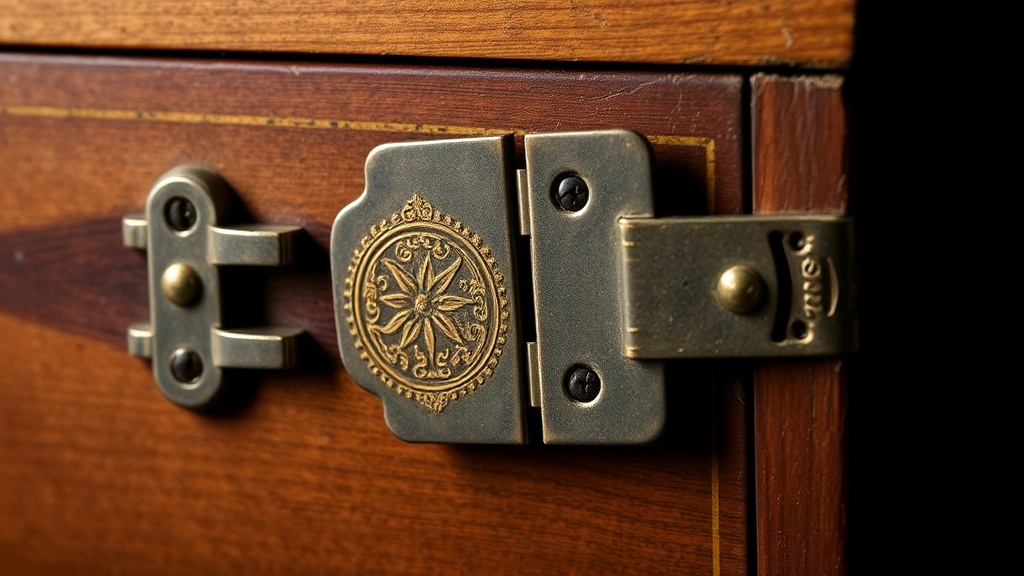
Authentic pieces often feature a "patina"—that soft, aged look that comes from decades of exposure to air and handling. You might see a slight greenish tint on brass or a dull, dark finish on iron. This isn't damage; it's a mark of time. If the metal looks too bright or "new," it's likely a modern replacement or a poorly aged reproduction.
Look closely at the way the hardware attaches to the wood. Most vintage hinges were attached using small, hand-driven nails or early screw types that aren't perfectly centered. If the metal is perfectly flush and the screws are modern Phillips head screws, the hardware has been swapped. It's a common red flag for collectors.
Check the weight. Older metals like heavy brass or thick tin have a specific heft that lightweight, modern zinc-alloy hardware lacks. A flimsy, light feeling usually indicates a modern imitation. It's a small detail, but it makes a difference when you're evaluating a high-end piece.
One thing to keep in mind is that many cigar boxes were produced by different manufacturers across various regions. This means hardware styles aren't universal. A box from a Cuban manufacturer might feature a much more ornate, heavy brass latch than a standard American cedar box. Always research the specific brand's history to see what their standard "look" was.
To understand the context of these brands, it's worth looking into the global journey of exotic tobacco brands, as the luxury status of the brand often dictated the quality of the hardware used.
What Are the Common Types of Vintage Cigar Box Hardware?
The most common types of vintage hardware include brass hinges, tin latches, and metal corner protectors (also known as corner guards or edging).
Each style serves a functional purpose, protecting the wood from impact and ensuring the box stays shut. Here is a breakdown of the standard hardware types you'll encounter in the field:
- Brass Butt Hinges: These are standard for most mid-to-high-end boxes. They are sturdy and often feature a slight curve to accommodate the wood's expansion.
- Slide Latches: Often found on single-lid boxes, these involve a small metal piece that slides into a notch to secure the lid.
- Corner Protectors: These are the L-shaped metal pieces that wrap around the edges. They prevent the wood from splintering and add a decorative flourish.
- Decorative Clasps: More expensive boxes might feature a central clasp that requires a thumb-press or a small key to open.
The design of these pieces often reflects the era of the box. For instance, Victorian-era boxes might have much more ornate, filigree-style metalwork compared to the utilitarian, streamlined hardware found on early 20th-century boxes. It's not just about function; it's about the aesthetic of the time.
If you are looking at a box with heavily decorated labels, the hardware often matches that level of luxury. A box with high-end iconography and symbols will almost always have more substantial, high-quality metalwork to match the premium branding.
How Do I Identify Modern Replacement Hardware?
Modern replacement hardware can be identified by its lack of oxidation, use of modern screw types, and extremely uniform manufacturing-grade finishes.
When you're inspecting a piece, you're looking for "perfection" where there should be "imperfection." Real vintage hardware has character. It has slight irregularities. If every single screw head looks identical and the metal is a consistent, bright color, it's a red flag. Modern manufacturing is too precise for the way things were made 100 years ago.
Here is a quick checklist to help you spot a replacement:
| Feature | Vintage Hardware | Modern Replacement |
|---|---|---|
| Screw Heads | Flat-head or irregular | Phillips or Star/Torx |
| Surface Finish | Patina, dull, or aged | Shiny, bright, or uniform |
| Attachment | Hand-driven nails/screws | Machine-perfect screws |
| Heavier (Brass/Tin/Iron) | Lighter (Zinc/Aluminum) |
The use of Phillips head screws is the most obvious giveaway. Phillips screws became the standard much later than the heyday of the most collectible cigar boxes. If you see a cross-shaped screw head, the hardware is almost certainly a modern addition. (I've seen many "antique" boxes that were actually refurbished with modern hardware for resale purposes.)
Another thing to watch for is the "feel" of the metal. If the hinge feels incredibly light or "tinny," it's likely a cheap modern alloy. Real brass has a certain density and weight that provides a sense of quality. It's a tactile thing—once you feel enough real-world pieces, you'll recognize the difference immediately.
Sometimes, the replacement isn't the hardware itself, but the way it's been cleaned. If the hardware is incredibly shiny and looks like it was just polished, it might have been scrubbed to hide the age of the box. This can actually decrease the value for some collectors who prefer the original, unmolested patina.
If you're worried about the condition of the box itself, you might want to check out my guide on cleaning dust and grime from vintage surfaces. It's important to be careful—over-cleaning can actually strip away the very patina that proves authenticity.
When examining the wood alongside the hardware, remember that the wood's reaction to the metal is a key indicator. In very old pieces, you might see a slight discoloration or "halo" around the metal where it has sat against the wood for decades. This is a good sign of an original, undisturbed-attachment. If the wood is perfectly clean right up to the metal edge, the hardware might have been recently installed.
The material of the box itself also matters. A box made of rare wood varieties will often be paired with much higher-quality metalwork. The synergy between the wood and the hardware is a hallmark of high-end production. If you see a high-end wood paired with low-quality, modern-looking metal, be skeptical.
One last tip: always check the underside of the hinge or the back of the latch. Often, the most telling signs of age are in the places people don't look. You might find maker's marks or small manufacturing stamps that are only visible when the piece is turned over or disassembled. These marks are the "fingerprints" of the era.
Steps
- 1
Check for uniform aging and oxidation patterns.
- 2
Look for hand-cut imperfections rather than modern precision-machined threads.
- 3
Observe the density and the metallic ring when lightly tapped.